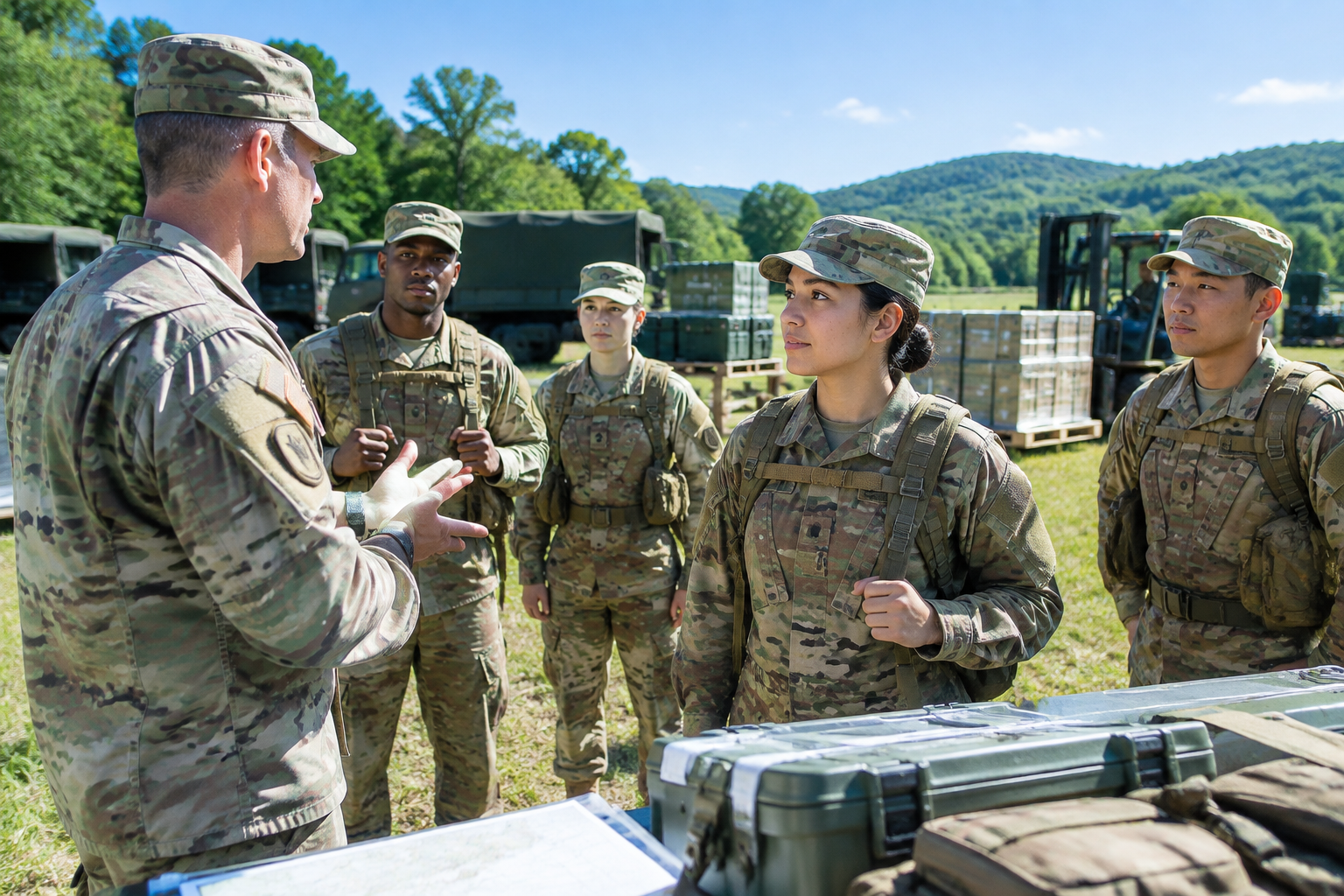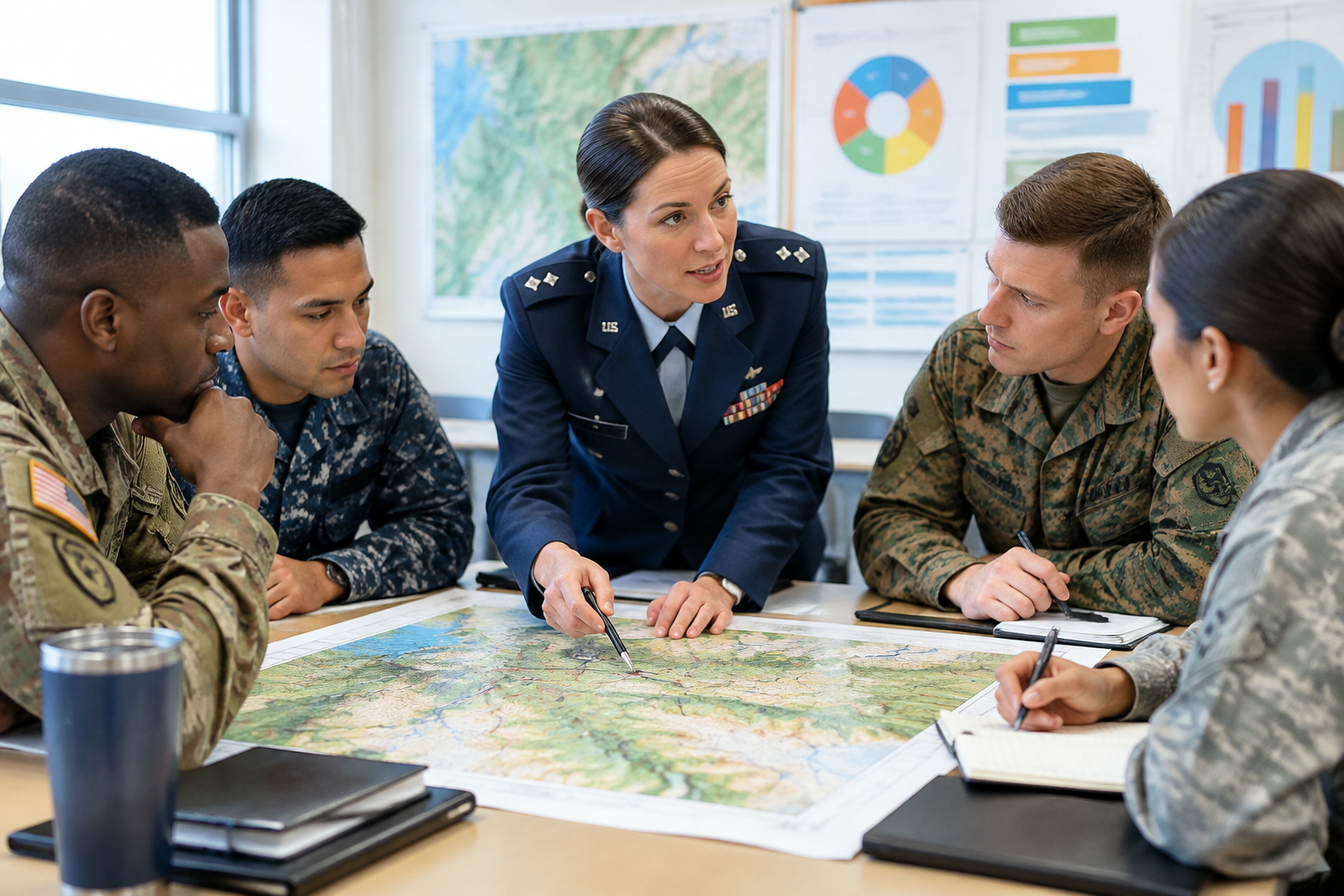
Military leadership carries a distinctive responsibility: decisions affect the mission, the welfare of service members, and the people touched by military activity. Competence and resolve must therefore be joined by ethical judgment. OmniLeadership 360 offers a framework for reflection on character, relationships, and responsibility without replacing doctrine, lawful authority, or professional training.
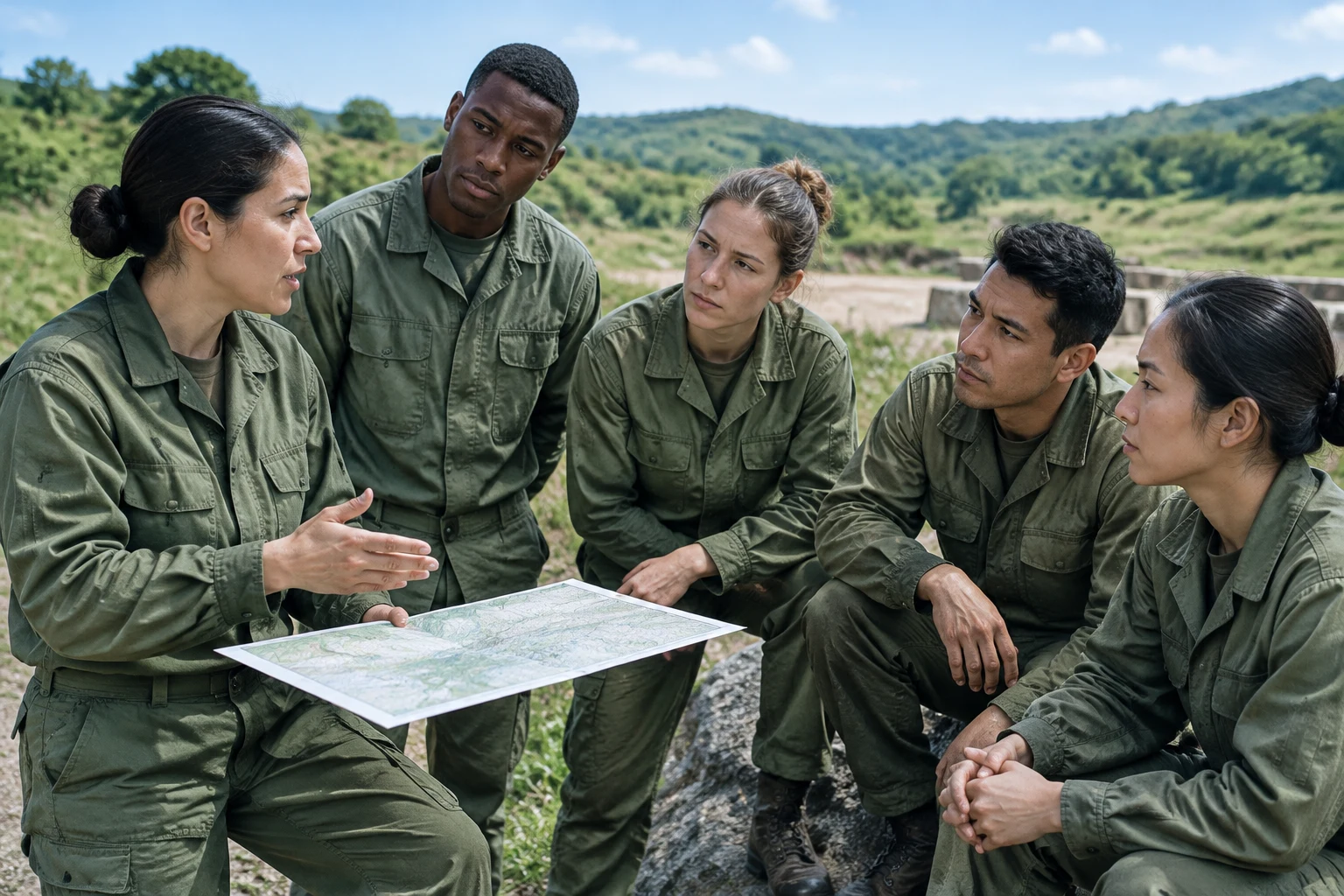
Resilience, unity, and moral courage
The original military framework highlights emotional resilience, ethical integrity, collaboration, meaningful purpose, adaptability, and valor. Valor includes moral courage: the willingness to report honestly, raise a legitimate concern, and uphold professional obligations even when doing so is uncomfortable.
In a demanding training exercise, these commitments can be expressed through calm preparation, clear expectations, appropriate challenge, and an honest debrief. Unity should grow from trust and shared responsibility—not silence. The framework can support reflection on leadership, but it cannot guarantee mission success or resolve every ethical dilemma.
Unite clear intent with responsible initiative
Leaders establish purpose, priorities, constraints, and the boundaries of delegated authority. Shared understanding helps teams exercise judgment when circumstances change. Initiative is not freedom from accountability; it is action guided by intent and professional obligations.
Preparation should cultivate both competence and the ability to recognize uncertainty. Invite questions during planning and training, confirm understanding rather than assume it, and distinguish confidence from unsupported certainty.
Treat character as a daily practice
Integrity is expressed through truthful reporting, fair treatment, and the willingness to address misconduct. Authority does not remove the obligation to act lawfully or to protect dignity. Leaders must model the standards they expect and make appropriate reporting channels credible.
Stoic reflection offers a language for courage, restraint, and attention to what remains within one’s control. Confucian role ethics highlights the responsibility attached to position and example. Hermetic interconnection can be used as a reflective metaphor for the relationship between individual conduct and unit culture, not as operational evidence.
Build readiness through trust and learning
A cohesive team is not one that avoids disagreement. It is one that can communicate concerns, prepare rigorously, and learn from experience while maintaining professional discipline. Respectful challenge in the appropriate setting can improve understanding and reduce preventable error.
After-action reflection should examine intent, observed outcomes, and the conditions that shaped performance. Pair lessons with concrete changes in preparation or communication. Attend to fatigue, well-being, and family pressures as factors in sustainable readiness—not as signs of weak commitment.
From reflection to practice
- State the purpose, constraints, and decision authority for a training task.
- Ask team members to explain their understanding and identify uncertainties before execution.
- Debrief outcomes and select one specific change to preparation, communication, or support.
A question for the leader
How does your use of authority strengthen—or weaken—the team’s willingness to report a problem honestly?